
Quick answer
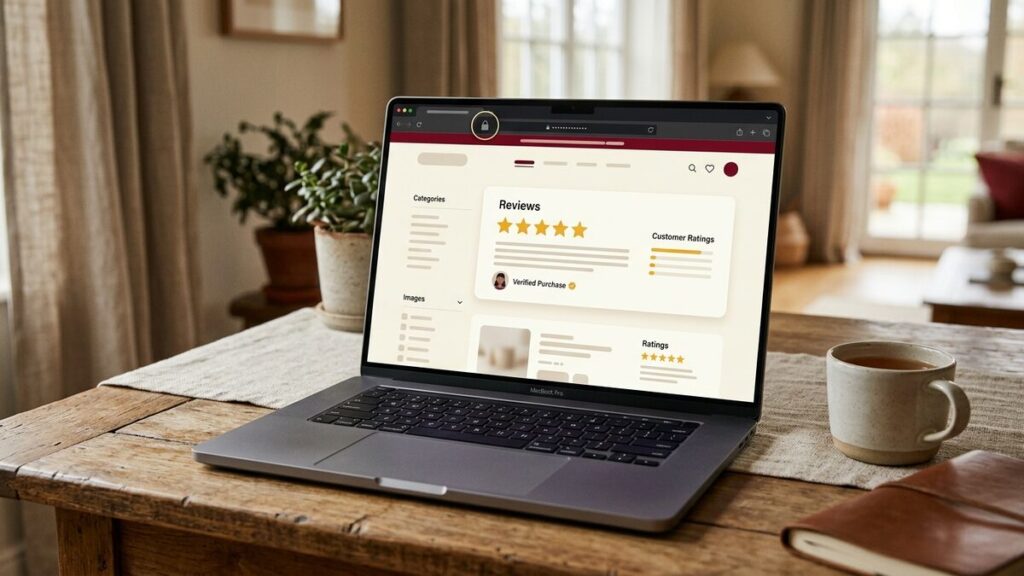
A website earns trust in seconds through concrete signals: real photos of your actual work, genuine recent reviews, clear contact details and a real address, a professional and fast design, a secure connection, and information that is consistent with what a visitor finds elsewhere about you. Visitors decide whether to trust you almost instantly and mostly unconsciously, so these signals need to be visible where they look. Trust is also what Google and AI assess when deciding whether to rank and recommend you. A trustworthy site is not about slick design alone; it is about visible proof that you are a real, credible business.
A visitor decides whether to trust your website in seconds, often before reading a word, and that judgment decides whether they stay or leave. Knowing what builds that trust lets you earn it on purpose. This builds on what a website is for and E-E-A-T.
Trust is decided fast
People form a first impression of a website almost instantly, weighing whether it looks legitimate and safe before they consciously think about it. A cluttered, slow, or bare site reads as risky; a clean, fast, proof-rich one reads as credible. Because this judgment happens so quickly and so early, the trust signals have to be visible right where a visitor lands, not buried on an about page they may never reach.
The signals that build trust
- Real proof. Photos of your actual work, not stock images.
- Genuine reviews. Recent, specific reviews from real customers.
- Clear contact details. A real address, phone number, and easy ways to reach you.
- A professional, fast design. Clean, current, and quick to load.
- A secure connection. The padlock that shows the site is safe.
- Consistency. Details that match what visitors find elsewhere about you.
Why trust matters beyond the visitor
The same signals that reassure a human also reassure Google and AI. Google assesses trustworthiness when deciding whether to rank you, and AI assistants weigh it when deciding whom to recommend. So a trustworthy site is not just better at converting visitors; it is better at being found and cited in the first place. Trust is one of those rare qualities that pays off with customers, search engines, and AI all at once, which is why it is worth building deliberately.
What quietly destroys trust
Some things undermine trust fast: stock photos pretending to be your work, no reviews or obviously fake ones, a missing or hidden address, a slow or broken site, a missing security padlock, and details that contradict what a visitor finds elsewhere. Any one of these plants doubt, and doubt sends a visitor to a competitor who left no such questions. Removing these trust-killers matters as much as adding trust signals.
Trust, expertise, and E-E-A-T
The trust signals a visitor reacts to are the same qualities Google formalizes as E-E-A-T: experience, expertise, authoritativeness, and trust, explained in what E-E-A-T is. Real photos show experience, detailed pages show expertise, reviews and recognition show authority, and consistency shows trust, which is why a trustworthy-looking site also tends to be one Google ranks. So building trust is not a separate job from SEO; it is the same work seen from the visitor’s side. The deeper foundation for both is covered in what a small business website is actually for. Make the proof visible where customers decide, and you earn the visitor’s confidence and Google’s at once, from a single set of changes.
The key idea
A website earns trust in seconds through visible proof: real photos, genuine reviews, clear contact details, a professional and fast secure design, and consistency with what visitors find elsewhere. Those signals must sit where visitors look. Trust also drives whether Google ranks you and AI recommends you, so it pays off three ways at once.
The bottom line
Trust is the quiet decision behind whether a visitor stays or leaves, and it is made in seconds on visible signals. Show real proof, genuine reviews, clear contact details, a fast secure design, and consistent information, and remove anything that plants doubt. To see how trustworthy your site looks to visitors and to Google, get a free audit.